Pruning trees: when to prune and how to do it properly
2 min read · Updated on
Pruning well is one of the most delicate jobs in the garden: done properly it gives a tree shape, health and vigour; done badly it can weaken it for years. Here are the fundamentals.
Why we prune
Pruning does a lot of good: it keeps growth in check, controls the development of grafted trees (fruiting and ornamental), encourages flowering and fruiting, restores vigour to weak or ageing trees, removes dead wood and maintains shape. The most important thing is to respect the tree's natural balance: never cut indiscriminately.
When to prune
- Deciduous trees and stone or pip fruit trees: in winter, while the sap is down, avoiding frosty days.
- Olive trees: in late winter, after the harvest.
- Spring-flowering shrubs: straight after they finish flowering.
- Summer pruning (suckers and water shoots): in summer, sparingly.
Cutting technique
The cut should be clean, angled, close to a bud or node, and ideally on branches of moderate diameter:
- Crossing branches: remove any growing back towards the trunk or rubbing against each other.
- Root suckers: always take these out; they steal nutrients from the tree. A good hand saw is all you need.
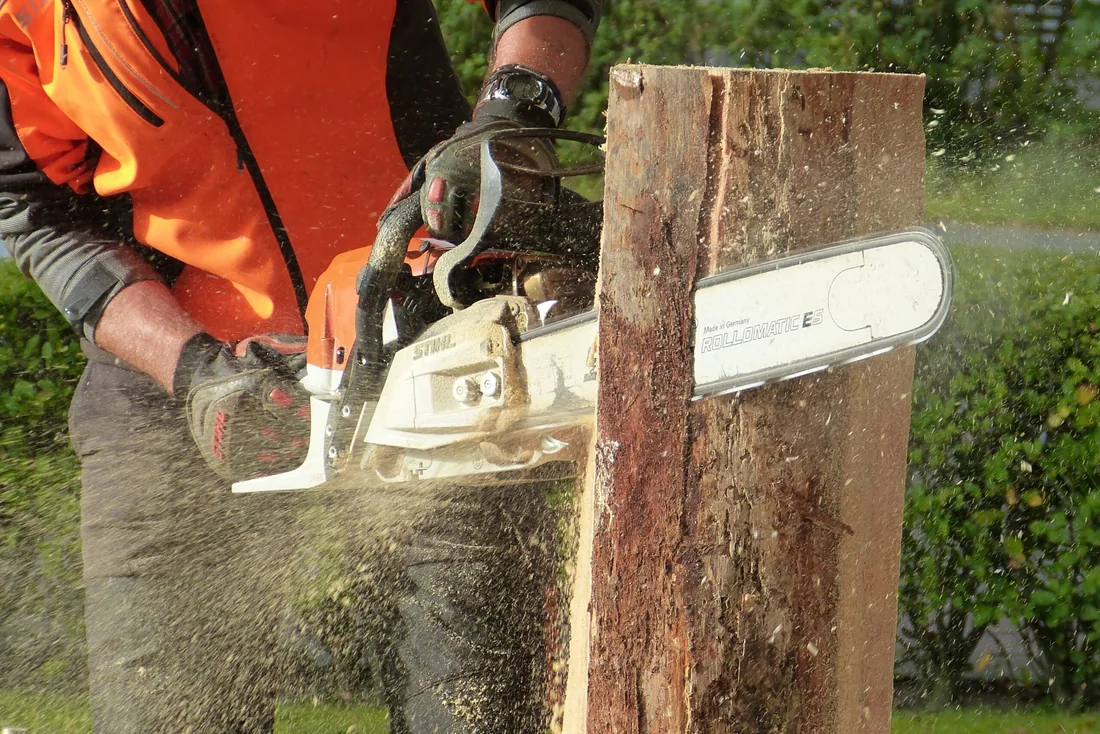
- Large branches (over 7.5 cm): make an undercut first so the branch does not tear under its own weight, then finish the cut from above with the chainsaw.
The tools
Sharp secateurs for thin growth, a Japanese pruning saw for medium branches and a light pruning chainsaw for the heavy work. And when you are done, remember the cuttings are not rubbish: chip them and you will have mulch for the whole year.
Not sure which pruning tool you need? Come and see us and we will set you up — sharpening included.
Related machineryChainsawsWood chippers