Scarifying: the secret behind a lawn that breathes
2 min read · Updated on
If your lawn looks yellowish, feels spongy underfoot and water pools on top instead of soaking in, the problem has a name: thatch. And so does the solution: scarifying.
What thatch is
Over time, a layer of dead material, old roots and moss builds up between the grass blades and the soil. That layer acts like a waterproof sponge: it smothers the roots, holds just enough moisture to encourage fungal disease, and stops water, air and feed from getting where they are needed.
What a scarifier does
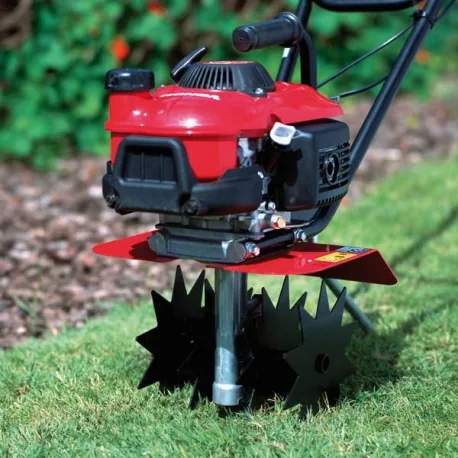
The scarifier cuts vertically into the surface with blades that rip out thatch and moss and open up narrow slits in the soil. The result: the lawn breathes again, water penetrates and the roots strengthen.
When to scarify
- Spring (March-April in the Empordà): the main window, when the grass is growing strongly and can recover quickly.
- Early autumn: a second pass if the lawn has taken a battering or there is a lot of moss.
Never in high summer or on frozen ground: the lawn would not recover.
How to do it, step by step
- Mow short (3-4 cm) a couple of days beforehand.
- Run the scarifier in one direction and, if there is a lot of thatch, again at right angles.
- Rake up the debris, or collect it with the mower's grass box.
- Take the chance to overseed any bare patches and feed the lawn: the open slits are the perfect seedbed.
- Water well over the following days.
Which machine
For small gardens an electric scarifier is plenty; for larger areas or thick thatch, a petrol model with fixed blades does the job in half the time. We stock both in the shop — ask us and we will tell you which suits your garden.
Related machineryScarifiersLawn mowers